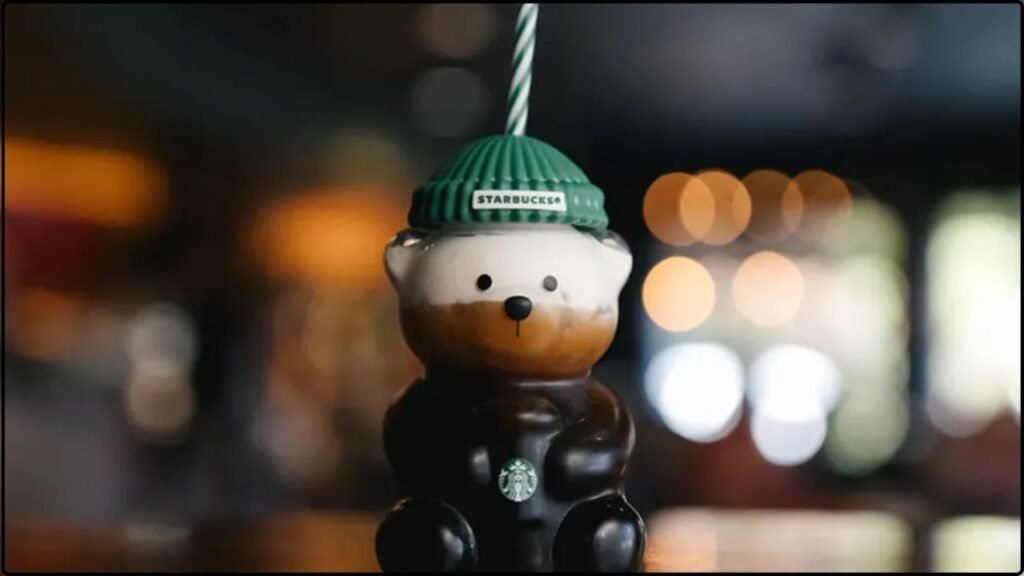
The Starbucks Bearista Cup contest opened nationwide this week, offering U.S. customers a second chance to secure the limited-edition holiday mug that sold out within hours of its November debut. The program runs through the Starbucks mobile app and follows intense public frustration over scarce stock, unexpected store crowding, and soaring resale prices.
Bearista Bear Mug
| Key Fact | Detail |
|---|---|
| Bearista Cup supply | 17,000 cups made available as instant-win contest prizes |
| Eligibility | U.S. Starbucks Rewards members through Jan. 4, 2026 |
| Reason for contest | Response to shortages, store disruptions, and customer backlash |
| Resale market activity | Listings reached several hundred dollars within 48 hours of release |
As the contest progresses, Starbucks faces the challenge of balancing demand, digital engagement, and customer expectations for future holiday merchandise. Whether the Bearista mug becomes an annual feature or a rare collectible, the company now has clearer insight into how quickly a seasonal product can turn into a national craze.
Why Starbucks Created the Starbucks Bearista Cup Contest
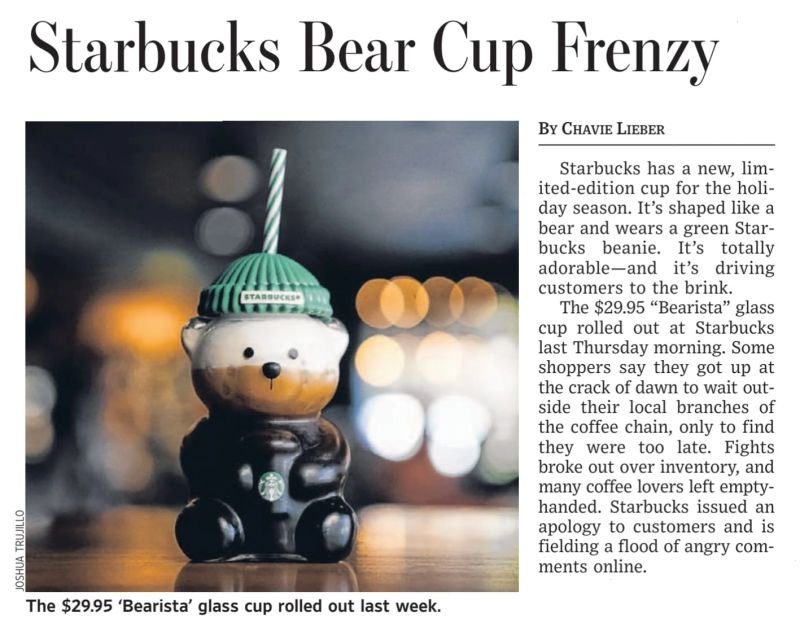
Starbucks implemented the Starbucks Bearista Cup contest after its holiday Bearista mug became an unexpected national sensation. Stores across the United States reported long lines before opening on launch morning. Some locations sold out their entire allocation—often fewer than five units—within minutes.
The company acknowledged the “intense and unforeseen demand” in a written statement. “Our goal is to offer customers a fairer opportunity to enjoy seasonal merchandise that resonated more strongly than anticipated,” a Starbucks spokesperson said.
A Viral Hit That Caught Starbucks Off Guard
The Bearista mug’s design—a glass cup shaped like a teddy bear with a green beanie—quickly circulated across social media platforms, driving a wave of early-morning store visits. Videos showing arguments in store lines and crowds rushing displays surfaced online, drawing national attention.
“Scarcity is a powerful economic force, but it must be managed carefully,” said Dr. Elena Price, a marketing professor at the University of Washington. “The Bearista launch illustrates how viral consumer trends can overwhelm even large retailers with sophisticated forecasting models.”
How the Starbucks for Life Merrython Contest Works
The company integrated the Bearista cup into its annual Starbucks for Life Merrython, one of the brand’s highest-engagement digital promotions. The game runs through January 4, 2026, and is accessible only to Starbucks Rewards members.
Participants receive a free weekly “play,” with additional chances earned through purchases or optional challenges. Each play may yield instant-win prizes, including bonus Stars, drinks, gift cards, or—most coveted—the Bearista mug.
Prize Structure and Odds
The contest’s 17,000-cup offering sounds substantial but is modest relative to Starbucks’ digital audience. The company has more than 34 million U.S. Rewards members, according to quarterly filings. Industry analysts estimate several million entries occur within the first week of the Merrython each year.
“This is fundamentally a sweepstakes,” said Mark Chen, a senior analyst at RetailMetrics. “Consumers should understand that while the cup is technically available, the probability of winning remains slim.”
Starbucks has not disclosed the full range of odds, citing standard sweepstakes regulations. Winners will receive their mugs by mail after the promotional period ends.
What Went Wrong During the Initial Bearista Mug Launch
Supply Chain Planning Challenges
Retail supply chain experts say the shortage reflects a broader pattern affecting seasonal merchandise. Production lead times for specialty glassware can span six to nine months, making rapid restocking nearly impossible.
“Holiday demand forecasting must incorporate unexpected viral behavior, which is extremely hard to predict,” said Dr. Priya Malhotra, a consumer behavior researcher at the University of Michigan. “When social media amplifies a product, the traditional forecasting curve becomes irrelevant.”
Manufacturing constraints also limit flexibility. The Bearista mug’s intricate three-dimensional glass design requires specialized facilities, meaning short-term production increases were not feasible.
Store-Level Impact and Worker Safety Concerns
Some store managers described the product release as unusually stressful. Two Starbucks district managers, speaking on background, confirmed that staff were trained to handle limited merchandise launches but were not prepared for the scale of customer demand and conflict seen that week.
Police departments in several metropolitan areas confirmed they received store disturbance calls related to merchandise disputes. No major injuries were reported, though workers cited “elevated tensions” and “customer aggression” in crowded locations.
Digital Contests as a Strategic Tool for Starbucks
Starbucks’ decision to move the Bearista mug behind a digital contest highlights an evolving strategy within the company.
Strengthening Digital Engagement
Starbucks has repeatedly emphasized its app ecosystem as a cornerstone of corporate growth. According to recent earnings reports, mobile orders, app payments, and personalized offers now represent a significant portion of U.S. transactions.
“Integrating sought-after merchandise into a rewards contest creates a powerful incentive for digital participation,” said Danielle Gomez, a retail strategy researcher at the Columbia Business School. “It shifts demand away from physical stores while strengthening customer engagement through the company’s app.”
Data Advantages for the Company
The contest format also helps Starbucks generate granular user data, including visit frequency, purchase types, and promotional response patterns. Analysts say this data is vital for personalizing offers and managing inventory across the chain’s 16,000 U.S. locations.
“Starbucks may use this event as a case study for future high-demand merchandise,” Gomez added. “Digital distribution allows the company to avoid the chaotic in-store issues seen this year.”
Resale Market Behavior and Cultural Influence
The Bearista mug quickly became a collector’s item after the initial rollout. Within 48 hours, resale listings on major online marketplaces exceeded $150–$300, according to data tracked by resale analytics firms.
“Limited-edition merchandising is a cultural phenomenon that intersects with nostalgia, status signaling, and scarcity economics,” said Dr. Morgan Kline, an economist who studies consumer markets at Purdue University. “Starbucks merchandise has long attracted collectors, but the Bearista mug appears to have crossed into mainstream interest.”
The company has not commented on resale activity, but experts say contests may reduce in-store reselling pressures while shifting resale behavior to contest winners.
Customer Experience, Safety, and Fraud Prevention
Online Scams Target Enthusiastic Collectors
Cybersecurity researchers say the Bearista mug’s popularity has attracted malicious activity. Bitdefender Labs reported phishing emails using fake Starbucks branding that urged recipients to “claim their cup now.”
“These campaigns exploit urgency and excitement,” said Andrei Petrov, a senior cybersecurity researcher. He advises customers to avoid clicking links in unsolicited emails and to confirm promotions directly within the Starbucks mobile app.
Starbucks issued a reminder that official notifications appear only through its app or verified corporate email addresses.
Balancing Hype With Customer Trust
The company’s response reflects broader concerns about maintaining customer trust amid viral merchandising trends. Following public criticism of its Black Friday tumbler shortages last year, Starbucks has faced increasing pressure to handle limited-edition items more transparently.
“As retailers rely more on hype-driven releases, they must also build systems that protect customer experience,” said Kline of Purdue University. “The Bearista contest is one experiment toward striking that balance.”
Broader Economic Context Behind the Frenzy
Consumer interest in novelty drinkware has grown steadily over the past decade, particularly during the holiday season. Market researchers point to several overlapping trends:
- Post-pandemic discretionary spending increases, particularly on small luxury items.
- Rise of social media-driven microtrends, where short-form video platforms amplify product desirability.
- Growing collector communities, many tied to brand loyalty programs.
- Strong cross-generational appeal, as holiday merchandise blends nostalgia with contemporary design.
“Starbucks sits at the intersection of routine consumption and emotional branding,” said Dr. Price. “Items like the Bearista mug function both as holiday décor and as social identity markers.”
What Comes Next for Starbucks Holiday Merchandise
The company has not confirmed whether the Bearista mug will return next year or remain a one-time promotional item. Starbucks noted only that it is “evaluating customer feedback and long-term demand.”
Retail analysts expect more digital-first releases. “This event demonstrated both opportunity and risk,” said Chen. “Future merchandise strategies will likely incorporate controlled distribution, online lotteries, or pre-order systems.”
In the coming weeks, customers will continue participating in the digital contest as Starbucks monitors engagement levels and prepares for year-end reporting.
FAQ
Why did Starbucks choose a contest instead of restocking?
The company said a contest offers fairer access and prevents the in-store disruptions seen during the initial release.
Is entry free?
Yes. Starbucks Rewards members receive one free weekly play, with optional additional plays earned through purchases.
Can winners resell their Bearista mug?
Starbucks does not prohibit resale, though the company encourages winners to enjoy the cup as a personal collectible.