First U.S. Guaranteed Income Program: The First U.S. Guaranteed Income Program, launched by Cook County, Illinois, is changing how Americans think about financial support. Instead of complex welfare rules or endless paperwork, this initiative gives $500 every month to thousands of residents — with no strings attached.
That’s right — no job requirement, no spending limits, and no judgment. It’s about trusting people to use the money how they need it most. From rent and groceries to car repairs or savings, participants have the freedom to decide what’s best for their families. This article breaks down everything you need to know — how it works, who’s eligible, how to apply, what experts are saying, and why this could reshape how the U.S. tackles poverty in the coming decade.
First U.S. Guaranteed Income Program
The Cook County Promise Guaranteed Income Program marks a new chapter in American social policy. It’s proof that a simple idea — giving people direct cash support — can lead to real, measurable change. For families, it offers stability and dignity. For policymakers, it offers data and insight into what a modern safety net can look like. $500 a month might not solve everything, but it’s a bridge — a step toward breathing room, opportunity, and hope. Cook County has shown that sometimes the best way to help people isn’t by telling them what to do, but by trusting them to do what’s right.
| Topic | Details / Stats | Why It Matters |
|---|---|---|
| Program Name | Cook County Promise Guaranteed Income Pilot | First publicly funded guaranteed income program in the United States |
| Monthly Payment | $500, unconditional cash | Recipients can use it freely — rent, groceries, childcare, or emergencies |
| Participants | 3,250 Cook County residents | Large-scale, randomized pilot to test long-term outcomes |
| Funding | $42 million from the American Rescue Plan Act (ARPA) | Federal COVID-relief funds made it possible |
| Permanent Budget | $7.5 million yearly starting in 2026 | Cook County voted to make it permanent |
| Eligibility | Age 18+, Cook County resident, ≤ 250% of Federal Poverty Level (FPL), not in another GI program | Focuses on working-class families hit hardest by economic hardship |
| Duration | Pilot: Dec 2022–Dec 2024; new cycle expected 2025 – 26 | Transitioning from pilot to permanent status |
| Official Website | cookcountyil.gov/promise | Application and updates |
What Is The First U.S. Guaranteed Income Program?
“Guaranteed Income” — often shortened to GI — is a simple idea with a long history. It means giving people regular cash payments with no restrictions on how to spend it. Unlike traditional welfare programs that tell people what they can or can’t buy, GI programs trust recipients to make their own financial decisions.
The concept dates back to the 1960s when Dr. Martin Luther King Jr. called for guaranteed income as the most direct way to fight poverty. In recent years, cities like Stockton, California, Compton, and New York City have tested the idea through smaller pilots, funded mostly by private donors or philanthropic groups.
The difference here is that Cook County’s program is publicly funded and permanent — meaning it’s a real government-backed plan, not a short-term experiment.
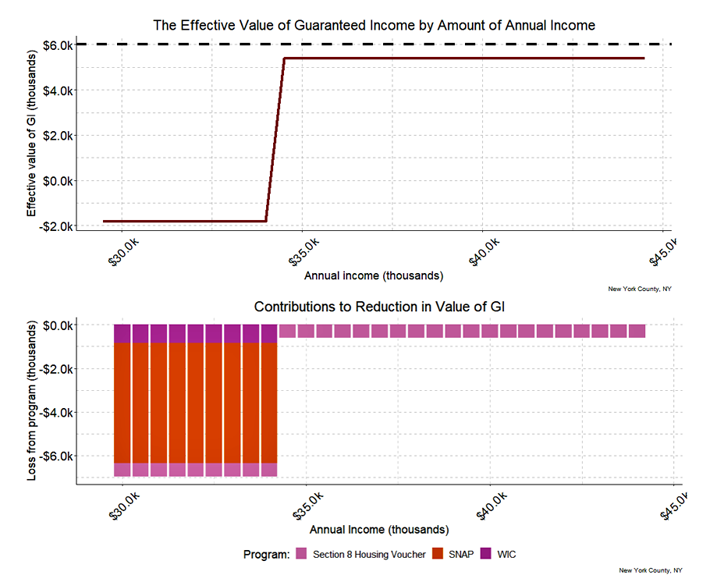
Why Cook County’s Program Stands Out?
Cook County isn’t just testing the waters — it’s diving in. The Cook County Promise Guaranteed Income Pilot is the largest county-level GI program in U.S. history.
The county launched the initiative in December 2022, supported by federal ARPA funds meant to help communities recover from the economic effects of COVID-19. Over 3,250 residents were chosen through a lottery system, receiving $500 monthly for two years.
Now, based on positive results and strong community feedback, the county has approved a $7.5 million annual budget starting in 2026 to keep the program running permanently. That makes Cook County the first government body in America to formally embed guaranteed income into its long-term budget.
Who’s Eligible for the First U.S. Guaranteed Income Program?— and How It Works
Eligibility is intentionally simple. The goal is to make sure the program reaches people who genuinely need it without forcing them through endless red tape.
Eligibility Requirements
- You must be 18 years old or older
- You must live in Cook County, Illinois
- Your household income must be at or below 250% of the Federal Poverty Level (FPL)
- You must not already participate in another guaranteed income program
Example of 2025 Federal Poverty Guidelines (250% FPL)
| Household Size | Maximum Annual Income |
|---|---|
| 1 person | $37,650 |
| 2 people | $51,100 |
| 3 people | $64,550 |
| 4 people | $78,000 |
| 5 people | $91,450 |
That means a single parent with two children earning less than $65,000 a year can qualify. Immigration status does not automatically disqualify applicants — the program focuses on residency and income, not citizenship.
How to Apply for the First U.S. Guaranteed Income Program??
The Cook County Promise application is entirely online through the official government website. When the next enrollment period opens, here’s what to expect:
- Check Eligibility — Make sure you meet the age, income, and residency requirements.
- Gather Documents — You’ll need proof of identity (driver’s license or ID), proof of address (utility bill, lease, or mail), and income documentation (recent pay stubs or tax returns).
- Submit the Application — Apply directly at cookcountyil.gov/promise when the portal opens.
- Lottery Selection — If applications exceed available spots, participants are chosen randomly to ensure fairness.
- Verification and Enrollment — Selected applicants are contacted for verification before payments begin.
- Receive Monthly Payments — $500 per month is sent via direct deposit or prepaid debit card for the approved duration.
The first program cycle ran from December 2022 through December 2024, but officials are preparing for new rounds in 2025–2026 as part of the permanent rollout.
What Participants Say?
Take Maria, a single mom from Chicago’s South Side. Before joining the program, she worked two part-time jobs and still struggled to pay rent. After being selected for the pilot, she said the monthly $500 made it possible to:
- Pay utilities on time, avoiding costly late fees
- Repair her car, cutting hours off her commute
- Save money for emergencies for the first time in years
For Maria and thousands like her, it wasn’t just about money — it was about peace of mind.
Another participant, a nursing student, used her payments to pay for textbooks and transportation. “It kept me from dropping out,” she told local news outlets.
These real-life stories mirror findings from earlier pilots in Stockton and Compton, where guaranteed income recipients spent funds mostly on basic needs: groceries, rent, utilities, and school expenses — not luxury goods, as critics sometimes claim.
Results and Data So Far
Independent researchers at the University of Chicago’s Inclusive Economy Lab are studying Cook County’s results. Early reports from similar programs show:
- Food insecurity dropped by 32 %
- Average household debt fell by 26 %
- Mental-health scores improved significantly
- Employment did not decline — many participants worked more hours once they stabilized financially
A 2024 analysis by the Federal Reserve Bank of Minneapolis also found that guaranteed income recipients often increased their work participation, since they could finally afford childcare or transportation.
These findings challenge the stereotype that unconditional cash payments make people “lazy.” In reality, they often create the breathing room people need to plan ahead, seek better jobs, and avoid crisis debt.
Common Criticisms — and What Experts Say
Every new policy has skeptics. Here are the main concerns and what data says in response:
| Criticism | Response / Evidence |
|---|---|
| “People will stop working.” | Multiple studies — including in Stockton, Compton, and Minneapolis — show no reduction in employment. Some even saw work hours increase. |
| “It will fuel inflation.” | Economists say local cash infusions of this size are too small to affect national inflation rates. The total Cook County outlay equals less than 0.001% of U.S. GDP. |
| “It rewards irresponsibility.” | 80–90% of spending goes to essentials: rent, food, bills, transportation, and education, per Stanford and University of Chicago data. |
| “Taxpayers can’t afford this.” | Long-term cost-benefit analysis shows GI can reduce public spending on homelessness, healthcare, and crisis assistance. |
Even cautious economists now acknowledge that well-targeted guaranteed income programs can complement existing safety nets instead of replacing them.
Historical and National Context
Guaranteed income isn’t some fringe idea. During the late 1960s, President Richard Nixon nearly passed a version of it called the “Family Assistance Plan,” which would’ve given minimum income guarantees to all U.S. families. It failed in Congress but sparked decades of research on cash-transfer economics.
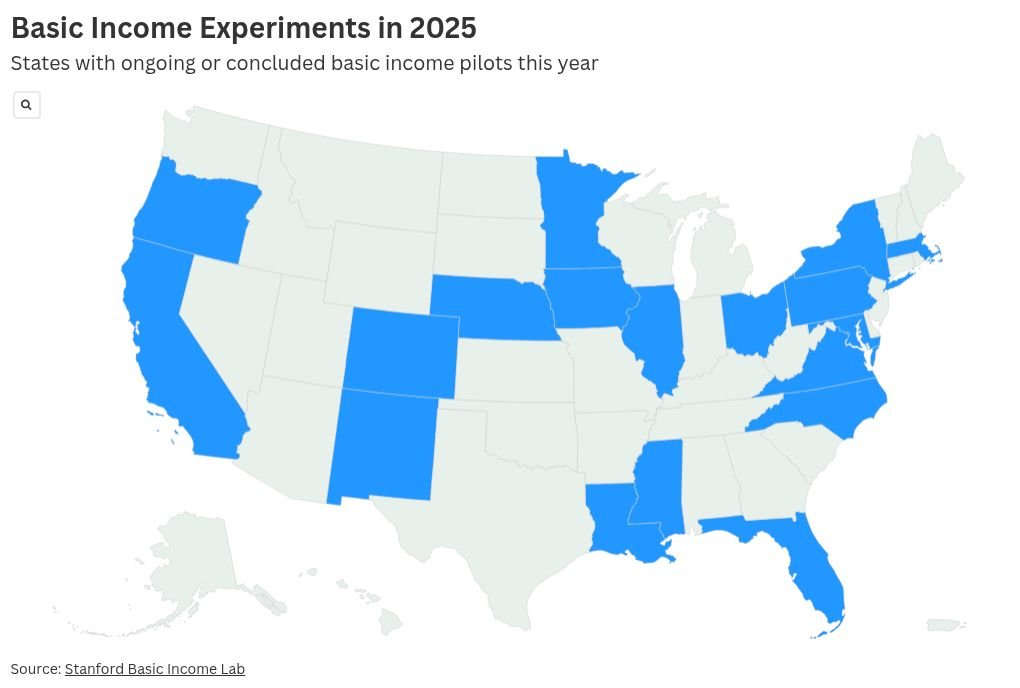
In the modern era, programs in Stockton, Jackson, Mississippi, Birmingham, Alabama, and Los Angeles have delivered similar results — more stability, better health outcomes, and no reduction in employment.
By going public and permanent, Cook County has turned theory into policy. Other governments — from New York City to Denver — are now watching closely to see if this model can be replicated.
Broader Impact on Families and Communities
Guaranteed income isn’t just about personal relief — it ripples through entire communities. When residents can pay bills on time, local landlords and small businesses benefit too. People buy locally, avoid payday loans, and reduce reliance on emergency aid.
It’s also been shown to improve child well-being. According to studies published by the Annie E. Casey Foundation, children in financially stable homes have better attendance, higher test scores, and fewer behavioral issues.
For professionals working in social services, housing, or public health, programs like this simplify casework — fewer crises, fewer evictions, fewer emergency interventions.
How to Prepare for the Next Application Window?
If you’re a Cook County resident hoping to apply in the next round:
- Visit cookcountyil.gov/promise regularly for announcements.
- Sign up for county email updates or alerts through cookcountyil.gov/subscribe.
- Gather your documents in advance — ID, pay stubs, and proof of address.
- Check your income level against the Federal Poverty Guidelines each January (they update annually).
- If selected, set up direct deposit to avoid card delays and track payments efficiently.
Remember, the application is free. If a website asks for payment to “help you apply,” it’s a scam.
What This Means for America’s Future?
Experts view Cook County’s move as a turning point in U.S. social policy. If results remain strong, we could see other counties and states follow suit.
Some policymakers even suggest integrating guaranteed income into federal aid systems — possibly tied to tax credits or local-level funding.
Advocates believe a national guaranteed income could reduce U.S. poverty by up to 20% within a decade, while critics urge fiscal caution. Either way, the Cook County experiment has started a conversation that’s spreading nationwide.
Texas SNAP Payments Set for December 8–14 — Check Payment Dates and Eligibility Criteria
Free iPhones for EBT Users? 2025 Program Details & How to Apply Now
VA Cremation Payouts Revealed: How Much Can Your Family Really Get?