Rachel Reeves Promises £150 Energy Bill Cut: When Rachel Reeves, the UK Chancellor, announced her plan to cut household energy bills by £150, millions of families breathed a sigh of relief. After all, energy prices have been one of the biggest financial headaches since 2022 — soaring gas prices, cold winters, and unpredictable market swings have left many Brits feeling squeezed. But here’s the uncomfortable truth: while Reeves’s promise sounds good on paper, experts warn the math may not hold up in the real world. Rising “net zero” costs, nuclear power financing, and grid-upgrade charges could easily eat up most — if not all — of that £150 saving. So, what’s really happening here? Let’s unpack it step by step — with plain English, real data, and practical takeaways for households and professionals alike.
Rachel Reeves Promises £150 Energy Bill Cut
Rachel Reeves’s £150 energy bill cut is politically smart and socially symbolic. It shows the government’s willingness to intervene to ease cost-of-living pressures. But beneath the headlines, the plan is more of a reshuffle than a reduction. Yes, households will save at first — but as nuclear projects, renewable commitments, and infrastructure upgrades roll in, those savings may fade away. Still, there’s reason for optimism. If managed transparently, these investments could deliver a cleaner, fairer, and more stable energy future for the UK. For now, the best move for consumers is to stay energy-smart, track their usage, and plan ahead.
| Topic | Key Details |
|---|---|
| Government Promise | £150 annual reduction in household energy bills from April 2026 |
| Where Savings Come From | Ending Energy Company Obligation (ECO) and shifting Renewables Obligation (RO) costs to general taxation |
| Hidden Costs | Nuclear financing, Ofgem network levies, renewables auctions (AR7) |
| Projected Network Levy Increase | £222 → £338 per year by 2030 |
| Likely Outcome | Short-term savings offset by new long-term charges |
| Professional Impact | Shifts energy funding from bills to taxation; opportunity for green innovation |
The Promise: Rachel Reeves Promises £150 Energy Bill Cut
In the Autumn Budget of 2025, Rachel Reeves laid out a plan designed to “make energy fair again.” Her headline announcement? Cutting the average household’s annual energy bill by £150 starting April 2026.
Here’s how the numbers work out:
- Scrapping the Energy Company Obligation (ECO): saves about £59 per household per year.
- Shifting 75% of the Renewables Obligation (RO) cost into general taxation: saves around £88.
- Removing smaller levies and VAT tweaks: saves an additional £7.
All together, households should, in theory, see that £150 reduction in what they pay to energy companies.
It’s an appealing move politically — a visible sign that the government is taking action on the cost of living crisis. But as economists like to say: there’s no such thing as a free lunch.
The Reality: Why Experts Say the Savings Might Not Last
Nuclear Power Financing Could Cancel It Out
Here’s the first red flag. Under the government’s Regulated Asset Base (RAB) model for funding new nuclear power stations, consumers will begin paying for projects before they’re built.
The high-profile Sizewell C project, estimated to cost £20 billion, will add roughly £35 per household per year in new levies — years before the plant produces a single kilowatt of electricity.
According to reports in The Independent, green energy entrepreneur Dale Vince called the policy “a sleight of hand,” saying that the government “gives with one hand and takes with the other.”
Ofgem’s Grid Charges Are Rising
The UK’s energy regulator Ofgem oversees the fees energy companies can charge for maintaining and expanding the national grid. Those costs are going up fast.
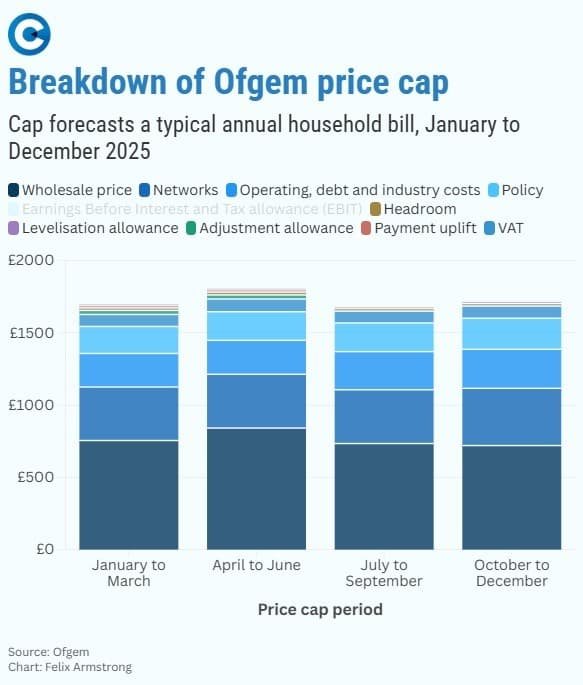
By Ofgem’s own projections, network charges are expected to increase from £222 per year in 2026 to £338 by 2030 — a 52% jump. These charges pay for grid reinforcement, renewable energy integration, and new transmission lines to link offshore wind farms to the mainland.
In other words, while Reeves’s plan removes some charges from your bill, Ofgem’s increases could quietly put them back.
Renewables Auctions and Net Zero Commitments Add Pressure
Then there’s the Allocation Round 7 (AR7) renewables auction — the next round of contracts to fund offshore wind, solar, and tidal power. This alone represents about £1 billion per year in new commitments, with the cost partially passed through to consumers.
That’s on top of the Carbon Price Floor, a policy tool that encourages companies to reduce emissions but indirectly influences the wholesale cost of energy.
Combined, these factors mean households may see only a temporary drop in bills before they climb again.
Why This Is Happening: The UK’s Energy Dilemma
At the heart of the issue lies Britain’s energy transition — moving from fossil fuels to clean, renewable sources. It’s a noble goal, but also an expensive one.
To achieve net zero emissions by 2050, the UK must modernize its entire energy system. That includes:
- Upgrading outdated grids.
- Investing in storage, nuclear, and renewables.
- Improving energy efficiency in older homes.
Each of these projects costs billions — and someone has to pay.
By moving certain levies to general taxation, Reeves is trying to make those costs less visible to consumers, but they don’t disappear. They’re simply moved from your utility bill to your tax bill.
The Silver Lining: Why the Policy Still Has Value
While critics argue the £150 saving is symbolic, it’s not meaningless. For millions of low- and middle-income families, that’s money back in their pockets — enough to cover a week of groceries, a tank of gas, or school supplies.
It also reflects a philosophical shift: energy should be treated as a public good, not a profit center. By funding renewables and infrastructure through taxation, the government ensures everyone contributes based on income, not energy use. That’s more equitable — especially for those who can’t afford large homes or electric cars.
What Households Can Actually Do?
Government policies may be unpredictable, but consumers still have control over their energy future.
1. Make Your Home Energy Smart
- Insulate your home — walls, roof, and floors. It can reduce energy usage by up to 25%.
- Upgrade to a smart thermostat — products like Nest or Hive let you fine-tune heating and cooling.
- Switch to LED bulbs — they last longer and consume 80% less energy.
For more help, visit the Energy Saving Trust — they have grants and local assistance programs.
2. Compare Energy Suppliers
Switching providers can still save households £200–£300 per year.
3. Consider Renewable Investments
Solar panels and heat pumps have become more affordable. Through the Boiler Upgrade Scheme, the government offers grants of up to £7,500 for low-carbon heating systems.
4. Track and Budget Your Usage
Smart meters and apps like Octopus Energy, Loop, or British Gas Smart Energy can show where your power goes each day. Reducing waste saves money immediately.
5. Get Involved Locally
Join community energy projects — local solar farms, co-op wind projects, and neighborhood efficiency schemes can provide discounts and dividends to participants.
What Rachel Reeves Promises £150 Energy Bill Cut Means for Professionals and Businesses?
For energy professionals, this shift is both a warning and an opportunity.
Changing Funding Models
Expect a steady move away from bill-funded schemes toward taxpayer-backed energy infrastructure. This means new opportunities for companies in grid technology, green finance, and retrofitting.
Policy Sensitivity
Energy markets are increasingly influenced by government intervention. Staying informed on regulatory updates, such as Ofgem’s network price control reviews, will be crucial.
The ESG Factor
With environmental, social, and governance (ESG) reporting gaining traction, companies that align early with net zero goals — especially by improving efficiency and reducing emissions — will attract investors and customers.
Data Snapshot: The Numbers Behind the Headlines
| Category | 2024 | 2026 (Projected) | 2030 (Projected) |
|---|---|---|---|
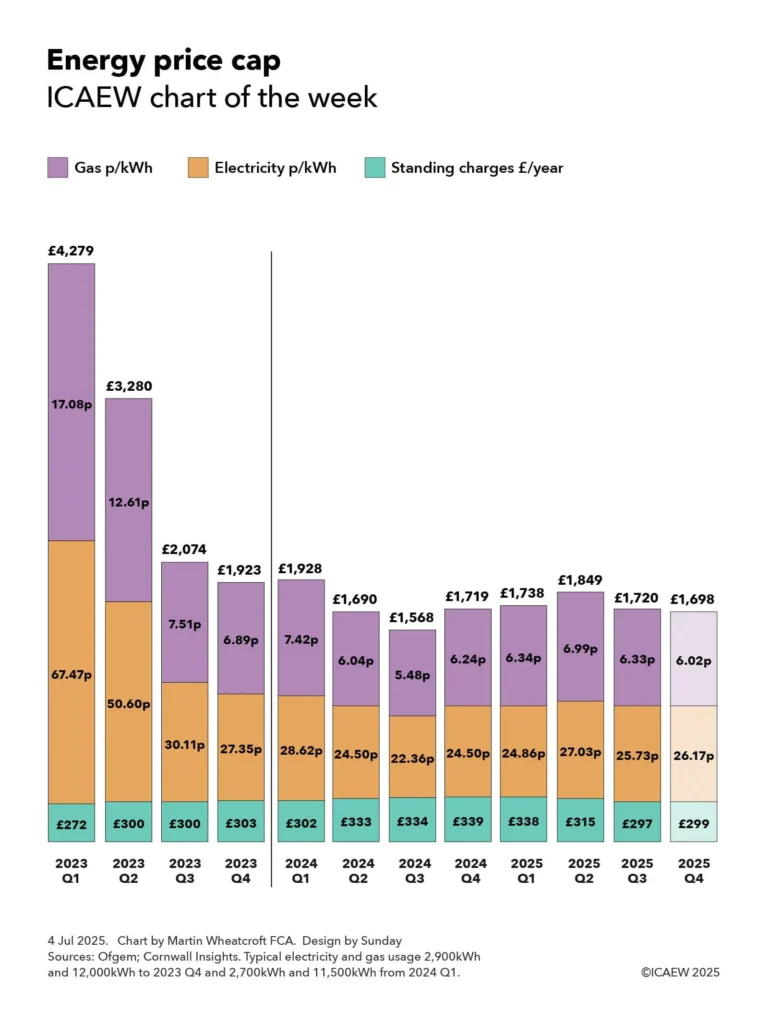
| Average Annual Energy Bill | £1,834 | £1,684 | £1,780–£1,900 |
| Nuclear Levy (Sizewell C) | £0 | £35 | £60 |
| Grid Levy | £210 | £222 | £338 |
| Tax Contribution to Energy Programs | £190 | £260 | £310 |
| Average Savings (After Adjustments) | — | £150 nominal / £0 net | — |