The U.S. Department of Agriculture (USDA) has released an updated national overview of Food Stamps, offering one of the most detailed examinations of Supplemental Nutrition Assistance Program (SNAP) participation in recent years. The report outlines who relies on the program, how demographic trends are shifting, and why the program remains a critical tool for reducing hunger among low-income households. The findings help clarify Who’s Really Receiving benefits amid ongoing public debate fueled by social media claims and political rhetoric.
Food Stamps
| Key Fact | Detail / Statistic |
|---|---|
| Largest racial group using SNAP | Non-Hispanic White households |
| Citizenship | 89% of SNAP recipients are U.S.-born citizens |
| Vulnerable populations served | 86% of benefits go to households with children, seniors, or people with disabilities |
| Poverty level | 92% of benefits go to households at or below the poverty line |
| Data gaps | USDA does not track SNAP usage by nationality |
As economic conditions shift and Congress prepares new funding proposals, SNAP participation may rise or fall accordingly. Analysts expect eligibility debates to intensify, but they agree on one point: the program remains central to the nation’s hunger-relief strategy.
Breaking Down Who’s Really Receiving Food Stamps
A Diverse Program Reaching Every Part of the Country
The USDA report confirms that SNAP remains one of the most widely used federal assistance programs, serving more than 40 million Americans in an average month. Participation spans every race, age group, and region. This broad reach reflects the program’s design: it expands during economic downturns and contracts as financial conditions improve.
According to Dr. Sarah Lau, a senior analyst at the Center on Budget and Policy Priorities (CBPP), “SNAP’s strength lies in its ability to respond quickly when families face unexpected hardship. The data shows the program is working as intended.”
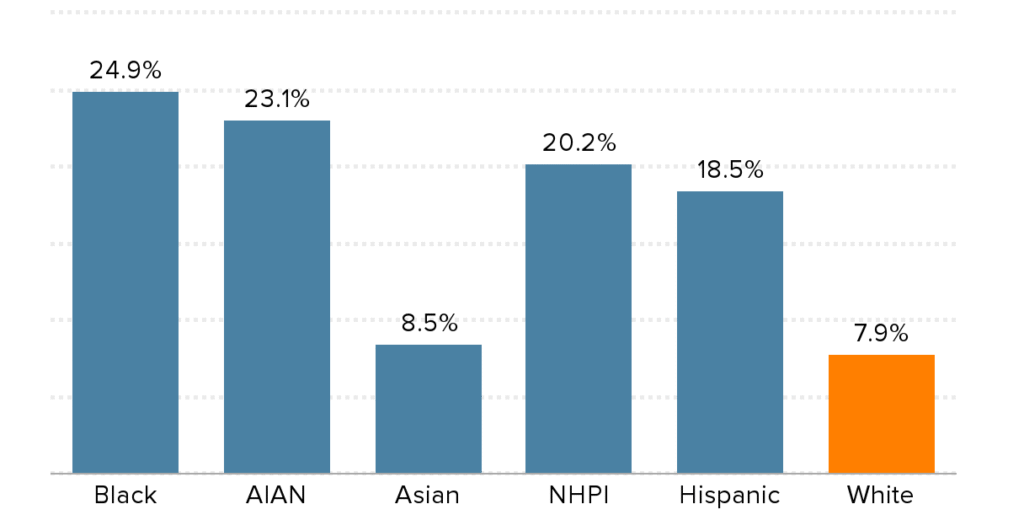
Shocking USDA Data Breaks Down Food Stamps Use by Ethnicity
Understanding the Demographic Breakdown
SNAP participation by race and ethnicity follows long-term national patterns:
- White (non-Hispanic): approx. 35%
- Black: approx. 26%
- Hispanic (any race): approx. 16%
- Asian: approx. 4%
- Indigenous and Alaska Native: approx. 1%
- Multiracial/Unreported: approx. 17%
These figures highlight both population size and structural economic disparities. For example, Black and Hispanic households participate at higher rates relative to their population shares because they face higher rates of poverty, wage instability, and historical economic barriers.
Dr. Michael Ortiz, an economist at the University of Michigan, said the findings “underscore the relationship between labor markets, wage inequality, and SNAP enrollment. Economic stress—not ethnicity—is the primary driver of participation.”
Why USDA Does Not Track SNAP Use by Specific Nationalities
Countering Viral Claims With Factual Reporting
Recent viral posts have suggested that certain immigrant groups—such as Afghan, Somali, or Iraqi refugees—make up disproportionately large shares of Food Stamps users. USDA officials confirm that the agency does not publish SNAP participation data by nationality, meaning such claims lack factual grounding.
A USDA spokesperson said in a written statement that “the agency reports participation only by broad racial and ethnic categories to maintain privacy standards and data reliability.”
This clarification is a direct response to widespread misinformation online, where selectively edited charts have been used to present a distorted picture of program usage.
SNAP Eligibility Rules Explain Why Most Participants Are Citizens
Understanding Who Can and Cannot Receive Food Stamps
Food Stamps eligibility is governed by strict federal guidelines. Unauthorized immigrants are not eligible for SNAP. Some legally present noncitizens, such as refugees or long-term permanent residents, may qualify under specific circumstances.
The USDA reports that:
- 89% of SNAP participants are U.S.-born citizens.
- The remaining share includes naturalized citizens and legally eligible noncitizens.
Dr. Lau emphasizes that “the narrative suggesting widespread noncitizen access to SNAP is inconsistent with federal law. The program is tightly regulated, and participation mirrors eligibility constraints.”
How SNAP Helps Stabilize Families During Economic Strain
Linking Food Stamps to Employment and Inflation
SNAP participation rises and falls with economic pressure. In recent years, inflation and housing costs have increased significantly, putting strain on household budgets. According to the Pew Research Center, food prices rose sharply between 2021 and 2023, affecting low-income families the most.
More than 92% of SNAP benefits go to households living at or below the poverty line. Many recipients work but earn wages insufficient to cover basic expenses, especially in states with high costs of living.
“SNAP closes a gap,” said Dr. Elena Ward, a public policy professor at Georgetown University. “It provides support when wages do not keep up with inflation or when workers face unstable scheduling.”
Historical Context: How Food Stamps Became a Cornerstone of U.S. Social Policy
From Pilot Program to Nationwide Safety Net
The Food Stamps program began as a pilot effort in the early 1960s before expanding nationally in 1974. Its purpose has remained constant: reducing hunger and improving nutrition for low-income households.
Three major reforms shaped the modern program:
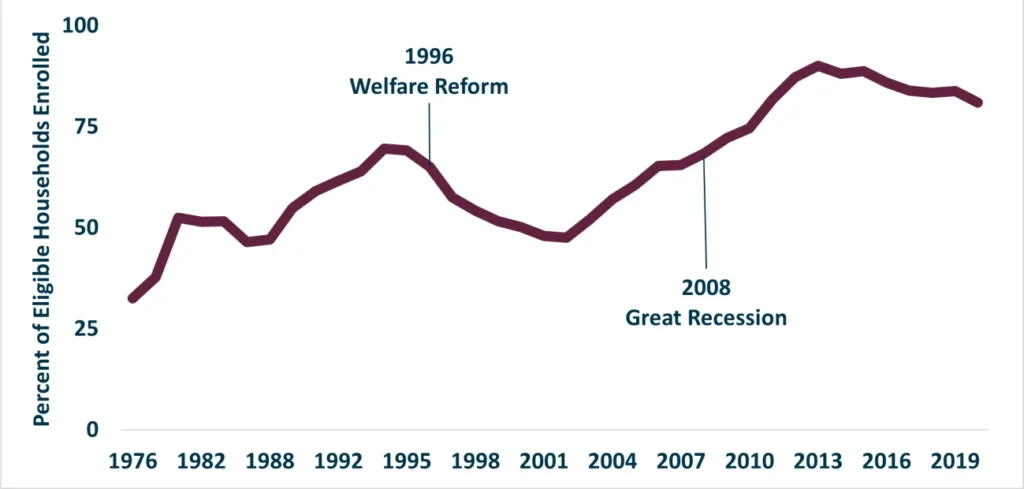
- 1996 Welfare Reform Act – introduced work requirements and tightened eligibility.
- 2008 Farm Bill – modernized benefit calculations and renamed the program SNAP.
- 2021 Thrifty Food Plan Update – allowed benefits to better reflect real food costs.
These reforms demonstrate how SNAP has evolved as a data-driven public policy tool.
Economic Modeling: How SNAP Supports Local Economies
A Dollar in Food Stamps Ripples Through Communities
Economists have found that SNAP provides measurable economic benefits. According to the USDA’s Economic Research Service, every dollar spent through SNAP generates up to $1.50–$1.80 in economic activity, depending on local conditions.
This occurs because households spend benefits quickly at grocery stores, which in turn stimulates supply chains, transportation networks, and food production. In rural areas with limited economic activity, SNAP spending can represent a significant share of retail revenue.
Dr. Ortiz notes that “SNAP is not only an anti-poverty program but also a local economic stabilizer.”
Myths vs. Facts: Clearing Up Misconceptions About Food Stamps
Fact-Checking Common Claims
Myth 1: Most recipients are unemployed.
Fact: USDA data shows that many participants are employed but earn low wages.
Myth 2: Immigrants make up the majority of SNAP users.
Fact: Most recipients are U.S.-born citizens due to federal eligibility rules.
Myth 3: Fraud is widespread.
Fact: SNAP’s fraud rate is historically low, with the USDA reporting less than 2% in recent reviews.
Myth 4: People stay on SNAP long-term.
Fact: Many households use SNAP temporarily during periods of financial hardship.
Policy Debates Ahead: What Congress May Consider Next
Funding, Work Requirements, and Future Program Changes
SNAP funding is scheduled for review during the next federal budget cycle, and policymakers are already signaling potential changes. Some lawmakers support tightening work requirements for able-bodied adults without dependents, while others argue such changes could harm vulnerable populations.
Advocacy groups have urged Congress to maintain benefit levels, citing inflation pressure on low-income families. The debate will likely center on cost, efficiency, and long-term economic impacts.
A Congressional Research Service analyst, speaking on background, said the upcoming debate “will shape the future of SNAP for millions of Americans.”
Human Impact: What the Numbers Mean for Families
Beyond Statistics, SNAP Represents Stability
While the USDA report is rich in data, experts stress that each figure represents a household navigating economic uncertainty. For families with children, Food Stamps can mean the difference between consistent meals and skipped dinners. For seniors, the program helps maintain nutritional health on fixed incomes.
“SNAP is one of the most effective ways to reduce food insecurity,” said Dr. Ward. “These findings remind us that millions rely on this support during difficult times.”